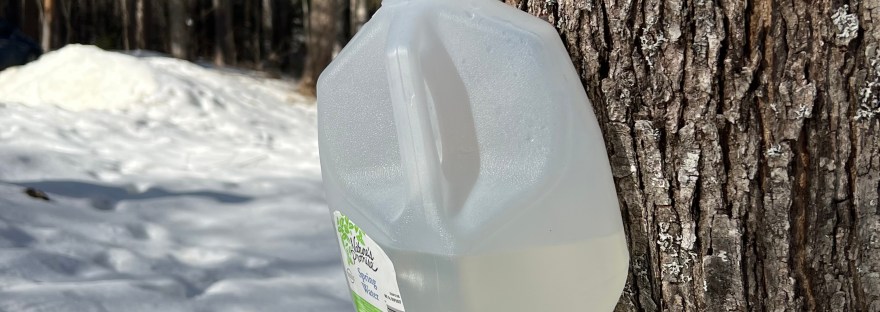
March arrived with lengthening days, fluffy snow, and warmer temperatures. Morning light means I’m jogging again (and limping around the rest of the day). The freezing nights and warm days midmonth had the sap flowing faster than I could keep up with. Every year I plan to upgrade my equipment. Yet again, milk jugs hung from my trees. Want to tap trees yourself next year? Check out UMaine Extension’s backyard sugaring resources to learn how to do it right.
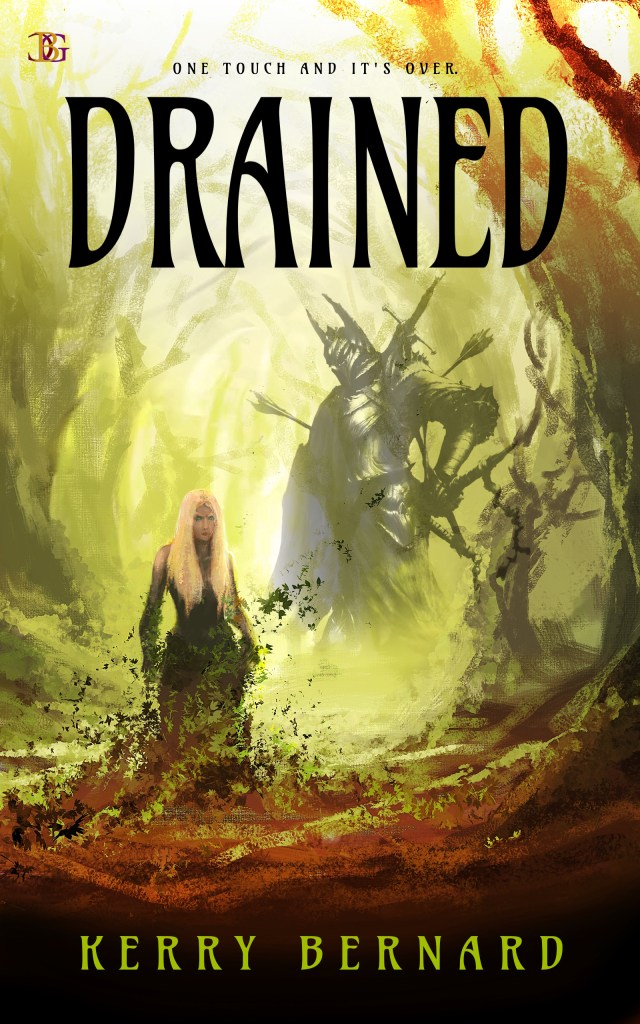
Drained debuts next month! NEXT. MONTH.
I’m seriously losing my mind knowing that these characters I’ve lived with for so long are going out into the world🎉And…I have a cover! Here’s a sneak peek!
Happy Vernal Equinox
The first day of spring was March 20th. Modern druids celebrate it as Alban Eilir. It’s a time to welcome burgeoning life, contemplate the balance of light and dark, and honor the maiden and stirring sun deities.
In the News
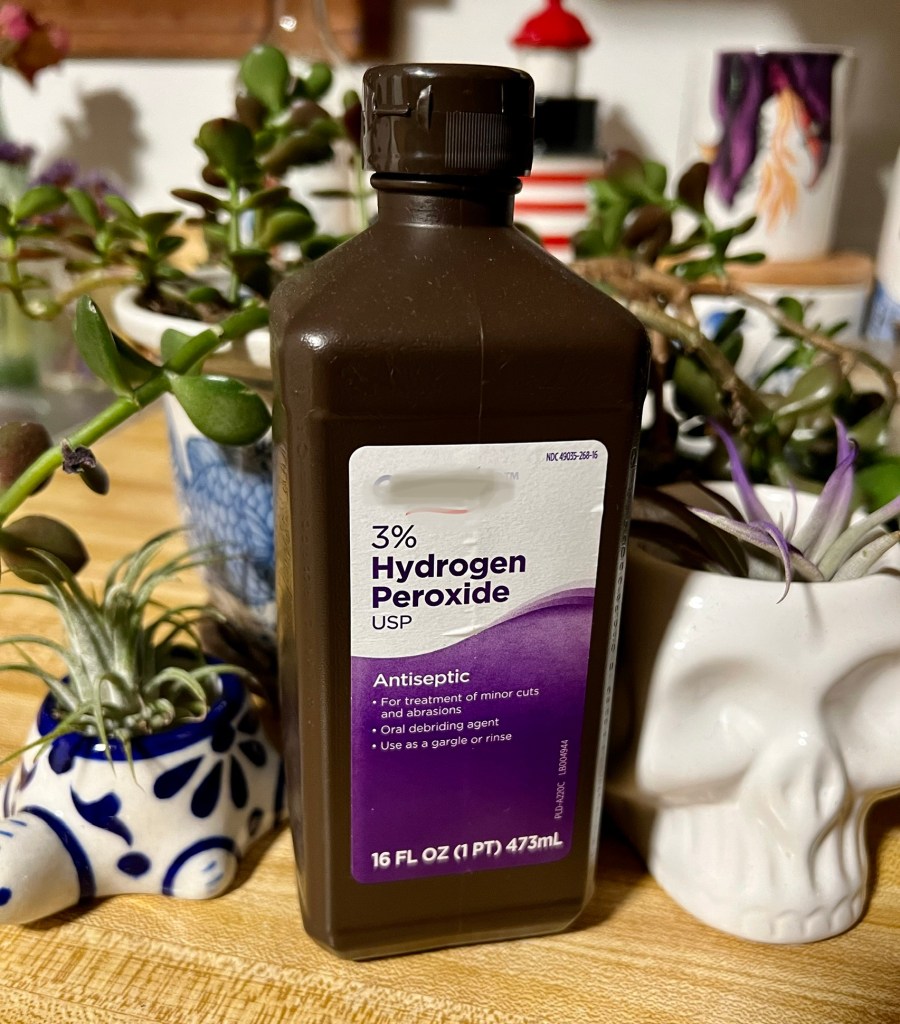
I made the newspaper! Not for my writing, though. It had to do with using hydrogen peroxide on houseplants. Unfortunately, some of the information I tried to convey was lost, and there’s a bit of a misquote at the end. Here’s the critical part of the message—don’t make your own pesticides. If you want to control a pest with a chemical, choose a registered product labeled for that use and follow the directions perfectly.
Maine Magic
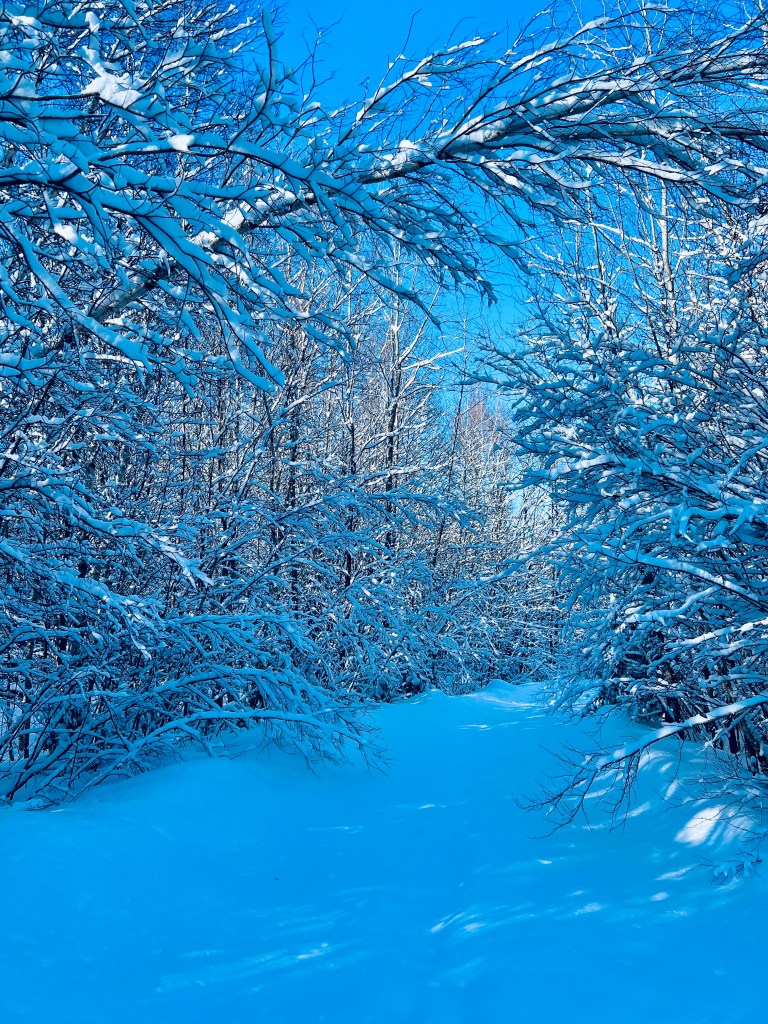
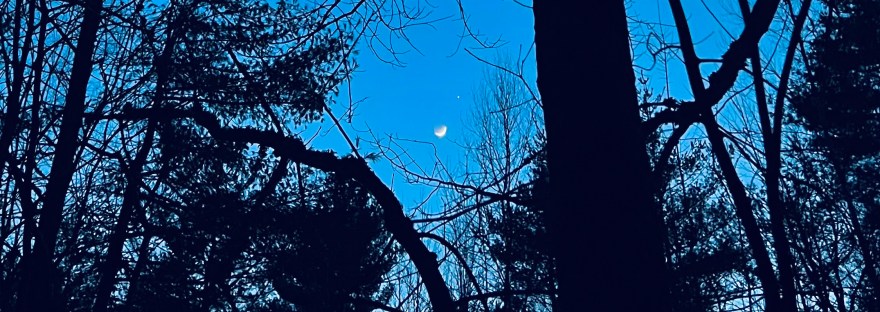
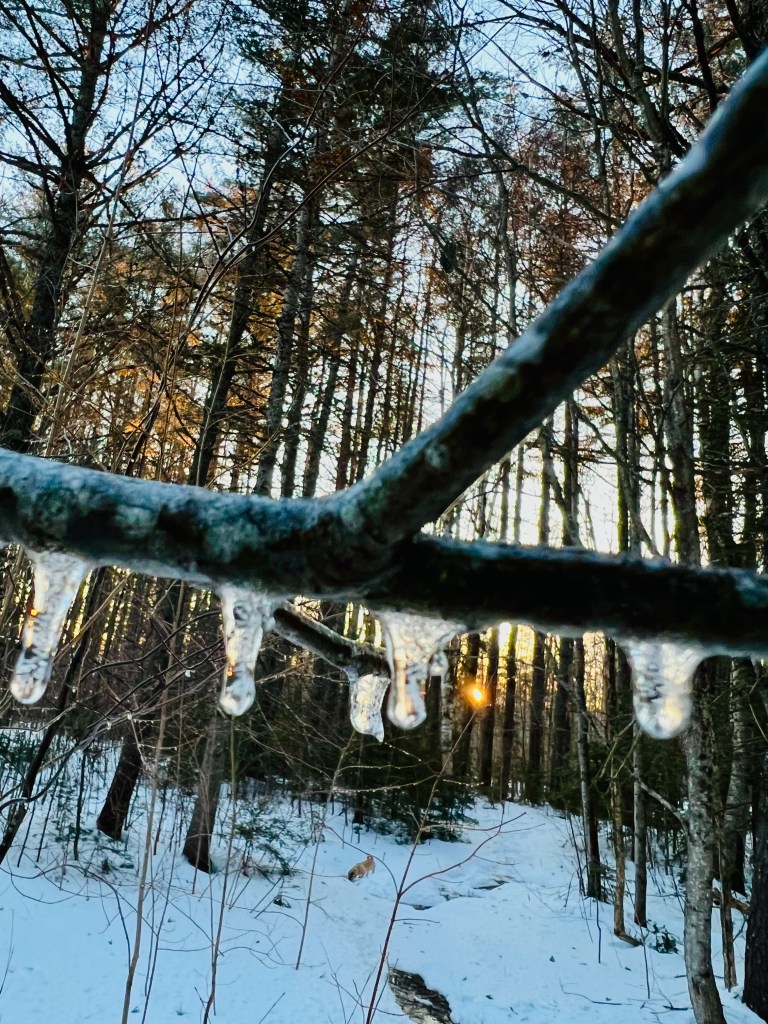
A sunny day after overnight snow is called a bluebird day. There’s something magical about the crisp white against the deep blue sky.
The Menagerie
We had Ray neutered this month. It hasn’t slowed him down at all. Reld’s transformation into an ogre is almost complete.
Happy Birthday
My amazing grandmother turned 90 this week. Happy birthday, Gram!
Okay, these are far from monsters, though they can be annoying and true pests under the right circumstances. I’m covering them only because my local newspaper interviewed me about using pharmaceutical hydrogen peroxide to control them in houseplants. According to the internet, this household chemical is the latest cure for wilting plants. As someone who writes about pesticide safety for a living, these things make me cringe. It’s risky to make your own pesticides—and that’s what hydrogen peroxide becomes when you use it against a pest. Homemade pesticides haven’t been tested for safety or effectiveness and don’t come with any directions. Pesticides bought at your local garden center have undergone a rigorous registration process with the EPA and come with detailed instructions to help ensure they control the pest and don’t harm the plant, other property, humans, pets, or the environment. But pesticides often aren’t necessary at all. Not if we understand the pest well enough to disrupt its life cycle without chemicals.
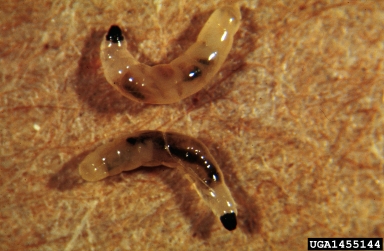
Description. With their slender bodies and long limbs, adult fungus gnats resemble little mosquitoes. Depending on their family, they may have dusky wings or humped backs. Fungus gnat larvae are transparent-white, wormlike maggots with head capsules.
Fungus gnat larvae. Photo by Whitney Cranshaw, Colorado State University, Bugwood.org
Distribution and Habitat. Fungus gnat larvae live in the soil—wet soil. They inhabit it worldwide, especially in forests, where they’re harmless. They become pests only when they proliferate in over-mulched garden beds, greenhouses, mushroom farms, and houseplants. Adults usually stick close to larval habitat, running and hopping around atop the soil or nearby plants.
Diet. Fungus gnat larvae eat fungi and decaying organic matter. When numerous in wet soil, they may also feed on plant roots, causing damage. Although some flies with the gnat title bite, fungus gnats do not. Neither do the adults harm plants. They feed on nectar and are beneficial as pollinators.
Life Cycle. Under the right conditions, the fungus gnat can undergo its entire lifecycle in as few as 20 days. Females lay up to 200 eggs in the soil, where the larvae feed for about two weeks before pupating. After emerging, adults live for a week to 10 days.
Battle plan. Put the peroxide away. Chemical warfare is rarely necessary to manage household infestations of fungus gnats. Yes, we all want that secret trick to everything–that one little folk remedy that solves it. But most successful pest control takes a variety of sound management strategies. The most important one for fungus gnats is to reduce the breeding habitat, disrupting the life cycle. Wet soil high in organic matter, including the plant’s debris, will promote fungus gnat survival and reproduction. So, let the top few inches of soil dry out between waterings and ensure the pot has good drainage. Don’t add too much organic matter or let it accumulate. Consider repotting the plants in a sterile potting mix if the infestation is already out of control. Yellow sticky card traps can help to manage adult gnats and monitor the population. Prevent new infestations by keeping indoor plants indoors, inspecting new plants brought into the home, and repairing any holes in window screens.
Hydrogen Peroxide. Many pesticide products contain hydrogen peroxide, but most are disinfectants (disinfectants are pesticides). Few are labeled for use on plants or soil. Those that are, for the most part, treat plant pathogens. They can be a good choice because ready-to-use, dilute hydrogen peroxide products are relatively low risk and break down quickly in the environment. More concentrated products, however, can burn the skin, damage the eyes, irritate the lungs, and cause gastric distress. Highly concentrated products can kill. And hydrogen peroxide is a strong oxidizer, meaning it can cause explosions if improperly stored. For those who feel they must use a chemical, a soil drench of the biopesticide Bacillus thuringiensis var. israelensis (Bti) is a better choice for gnat control than pharmaceutical hydrogen peroxide. I don’t recommend any sprays for adults. The risks of treating indoor areas for a nuisance pest generally outweigh any benefits. Remember, fungus gnats can’t harm people or pets—but pesticides can.
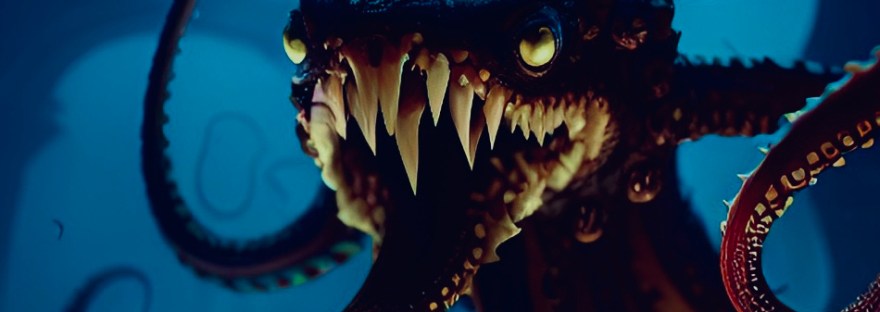
A devotee to the god of the sea and desperate to shake her pursuers, Sarlona calls upon the denizens of the deep to help her escape when cornered on the beach. Chief among them is the kraken—a sea monster believed to rend ships and devour sailors. Although depicted as a massive octopus in Scandinavian lore, the kraken in Drained is described more like giant or colossal squids (Architeuthis dux and Mesonychoteuthis hamiltoni),the sightings of which probably inspired the original tales.
Like the kraken, the massive squids inhabit another world—those ocean depths we humans have only gotten glimpses into. So far, scientists have had to base their conclusions about the species on dead or dying specimens and a few video recordings. What we do know is that they are, in fact, giants. They’re also voracious predators.
Description. Earlier this month, I made the regrettable mistake of wearing an octopus t-shirt to the doctor’s office, where no less than three people assumed that my garb wasn’t an aesthetic choice but a mark of my expertise. They all wanted to know the difference between an octopus and a squid. While no tuethologist (cephalopod biologist), I did have an answer. Generally, octopi have eight appendages and spend most of their time on the sea floor. Squids have ten appendages and swim open waters.
Try as I might, I could not convince an AI art app to make a squid-like kraken.
Those ten appendages come equipped with toothed suction cups meant for wrapping around wriggling flesh and not letting go. Two of them, the tentacles, are longer than the others and designed to snatch prey at a distance. The colossal squid’s tentacles bear horrific, swiveling hooks at the ends. Including the tentacles, giant squid specimens have measured as long as 43 ft. The colossal squid has shorter appendages but is heftier, with known weights exceeding 1000 lbs. Ranking as the largest invertebrates on earth, I think it’s safe to say both species live up to their names. Of course, no one knows how big they might grow in the abyss. With eyes the diameter of a basketball, their eye size is perhaps more impressive than their overall dimensions. These monsters have bigger eyes than any other animal—critical for detecting the tiniest trace of light in the depths.
Distribution and Habitat. Giant squid have been documented in temperate ocean waters worldwide. Colossal squid dwell in the Southern Ocean. The giant squid inhabits only the deep sea, usually at depths greater than 1000ft. Those found near the surface are often injured or dying, their delicate, red skin observed torn and ragged.
Diet. Giant and colossal squids eat fish and smaller squid. They may lure their prey nearer with bioluminescence, emitting light from either their skin or eyes at will. The lorkai, though unrelated to cephalopods, can also make their eyes fluoresce. While once believed to feed rather passively, video footage in their natural habitat shows that giant squid are probably active hunters like colossal squid. Squids are fast. They swim using jet propulsion—sucking in water and squirting it through a siphon to shoot forward while steering with their mantle fins.
Giant squid themselves are prey for other animals, especially when young. Sperm whales and deep-sea sharks feed on even adult giant and colossal squids. In addition to the toothed suckers that scar the skin, giant squid shoot ink to dissuade their predators. However, their eyes are probably their best defense, able to detect hungry whales at a distance in extreme darkness.
Life cycle. We know little about giant squid reproduction, but scientists believe males inject sperm packets into the arms of females. Those females disperse millions of fertilized eggs. The lucky few squid to survive to maturity grow tremendously fast—giant squid only live four or five years.
Monster? There’s no solid evidence that giant (or colossal) squid rise from the deep to attack boats and snack on sailors like the kraken was said to. They seem only to come to the surface when dead or nearly so. But there is a strange tale or two of mysterious marine life latching onto boats and dragging them to a standstill in modern times. And smaller, better-studied cephalopods can put up a hells of a fight on the deck of a boat and have even attacked divers. So, while it probably can’t be blamed for sunken ships, the giant squid’s size, toothed suckers, and mystery qualify it as a monster in my book.
If you want to know how successful the kraken is in defending Sarlona against monsters of a different sort, check out Drained next month.
This month, I read fellow Champagne Book Group author (and editor) Sevannah Storm’s The Healer, the second book in her Blood of Legends series. It’s the first shifter novel, paranormal romance, and ebook I’ve read cover to cover. Much to my eternal shame, I’m a slow reader, but I devoured this book in 3 days.
The Healer is a dual-POV story that follows Ilona, a doctor fresh off her residency, and Rhys, the new alpha of his shifter pack. After a personal tragedy derails Ilona’s career, her grandmother sends her to a rural shifter community where Rhys is visiting his brother and taking some much-needed time off. Rhys becomes infatuated after startling her on the snowy roadside in his bear form. Unbeknownst to her, she shares blood with the woman he wants—and can’t have.
Unfortunately for Rhys, Ilona isn’t up for dealing with shifter nonsense or risking a broken heart. But roped into filling in for the shifter’s country doctor and recognizing the importance of shifter blood’s healing properties, she can’t quite pull herself away. Until she realizes it’s her bloodline that got Rhys’s attention. Ilona is not about to be anyone’s consolation prize. Rhys must prove he truly loves her (and no one else) or lose the mate he’s destined for.
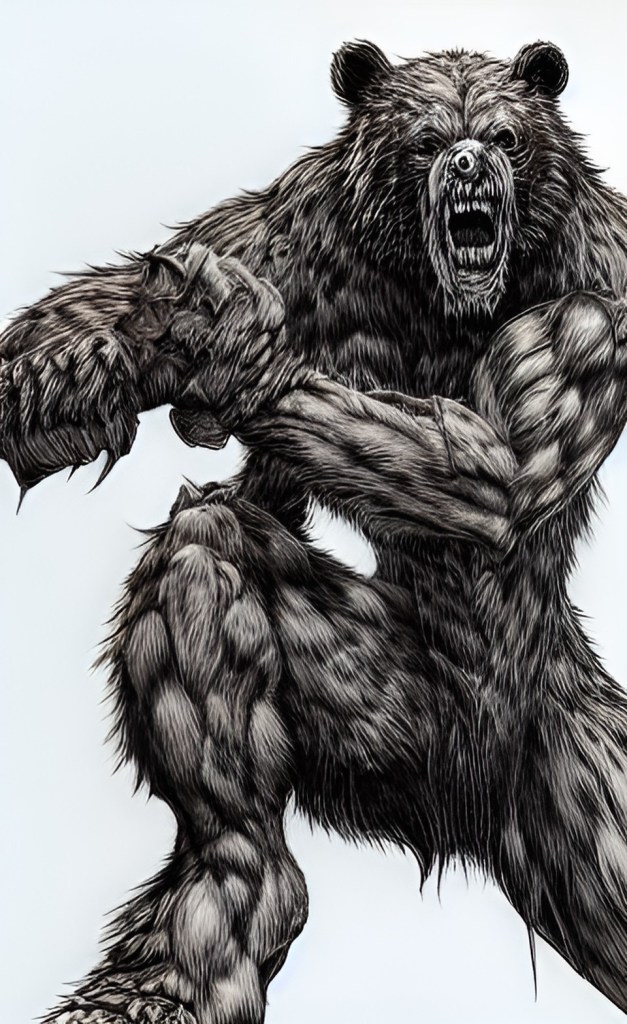
What the love interest would look like if I tried to write a shifter romance.
I love the female lead in this book. Ilona’s a realistic mix of resilient and vulnerable. She’s intelligent, pragmatic, and devoted to her craft. While she knows her limits, she still pushes them and cares for others without putting herself last. I also love her sassy grandma.
Rhys is hot, obviously—he never lets his alpha side get the better of his kindness or sense of responsibility.
I also liked the worldbuilding in this novel. I haven’t read too many books where vampires and werecreatures live separately from but harmoniously and known to humans. I loved the snowy, rural setting, too.
Fun, steamy, and relaxing, the Healer was what a novel should be—enjoyable. I recommend it to anyone who needs more romance and monsters in their lives.
February is almost over, and what a month! It arrived with a burst of subzero temperatures in Maine. In the first week, it plummeted to -22 F, -44 with windchill. Two weeks later, it was raining. My dad, who just turned 73, said it’s the first time in his entire life it has rained on his birthday. Find a middle ground, February.
Big announcement! My debut novel, Drained, will be released on April 10th by Champagne Book Group! Becoming a published author is a dream come true for me. I can’t believe it’s happening!
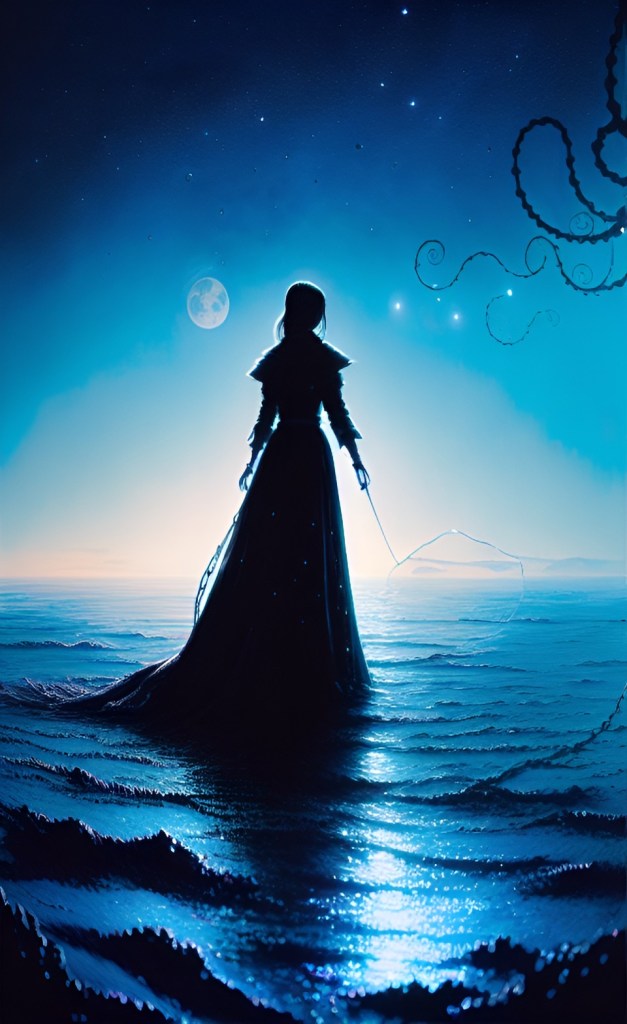
A powerful druidess overlooks a calm, moonlit sea, oblivious to the encroaching nightmare.
Maine Magic
One of my favorite February photos, taken in my backyard at sunrise.
The Menagerie
Our pug mix, Reld, had surgery to remove a rapidly growing lump from her throat. The tumor came back benign, and she’s healing up well. The new puppy, Ray, started doggy daycare this month. We hope it will make him less neurotic than Reld. Pan, the forest cat, continues to accompany me on my winter walks in the woods. Summer cat’s new hobby is taking my gloves off the shelf by the door and depositing them around the house. I have no idea what she’s trying to accomplish. My human kiddo scored her first basket at her first game of the year.




 K.W. Bernard