

Okay, these are far from monsters, though they can be annoying and true pests under the right circumstances. I’m covering them only because my local newspaper interviewed me about using pharmaceutical hydrogen peroxide to control them in houseplants. According to the internet, this household chemical is the latest cure for wilting plants. As someone who writes about pesticide safety for a living, these things make me cringe. It’s risky to make your own pesticides—and that’s what hydrogen peroxide becomes when you use it against a pest. Homemade pesticides haven’t been tested for safety or effectiveness and don’t come with any directions. Pesticides bought at your local garden center have undergone a rigorous registration process with the EPA and come with detailed instructions to help ensure they control the pest and don’t harm the plant, other property, humans, pets, or the environment. But pesticides often aren’t necessary at all. Not if we understand the pest well enough to disrupt its life cycle without chemicals.
Description. With their slender bodies and long limbs, adult fungus gnats resemble little mosquitoes. Depending on their family, they may have dusky wings or humped backs. Fungus gnat larvae are transparent-white, wormlike maggots with head capsules.
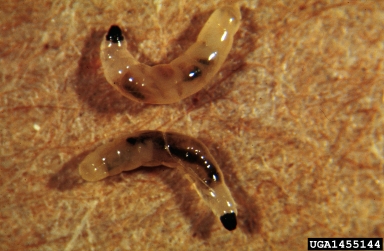
Distribution and Habitat. Fungus gnat larvae live in the soil—wet soil. They inhabit it worldwide, especially in forests, where they’re harmless. They become pests only when they proliferate in over-mulched garden beds, greenhouses, mushroom farms, and houseplants. Adults usually stick close to larval habitat, running and hopping around atop the soil or nearby plants.
Diet. Fungus gnat larvae eat fungi and decaying organic matter. When numerous in wet soil, they may also feed on plant roots, causing damage. Although some flies with the gnat title bite, fungus gnats do not. Neither do the adults harm plants. They feed on nectar and are beneficial as pollinators.
Life Cycle. Under the right conditions, the fungus gnat can undergo its entire lifecycle in as few as 20 days. Females lay up to 200 eggs in the soil, where the larvae feed for about two weeks before pupating. After emerging, adults live for a week to 10 days.
Battle plan. Put the peroxide away. Chemical warfare is rarely necessary to manage household infestations of fungus gnats. Yes, we all want that secret trick to everything–that one little folk remedy that solves it. But most successful pest control takes a variety of sound management strategies. The most important one for fungus gnats is to reduce the breeding habitat, disrupting the life cycle. Wet soil high in organic matter, including the plant’s debris, will promote fungus gnat survival and reproduction. So, let the top few inches of soil dry out between waterings and ensure the pot has good drainage. Don’t add too much organic matter or let it accumulate. Consider repotting the plants in a sterile potting mix if the infestation is already out of control. Yellow sticky card traps can help to manage adult gnats and monitor the population. Prevent new infestations by keeping indoor plants indoors, inspecting new plants brought into the home, and repairing any holes in window screens.
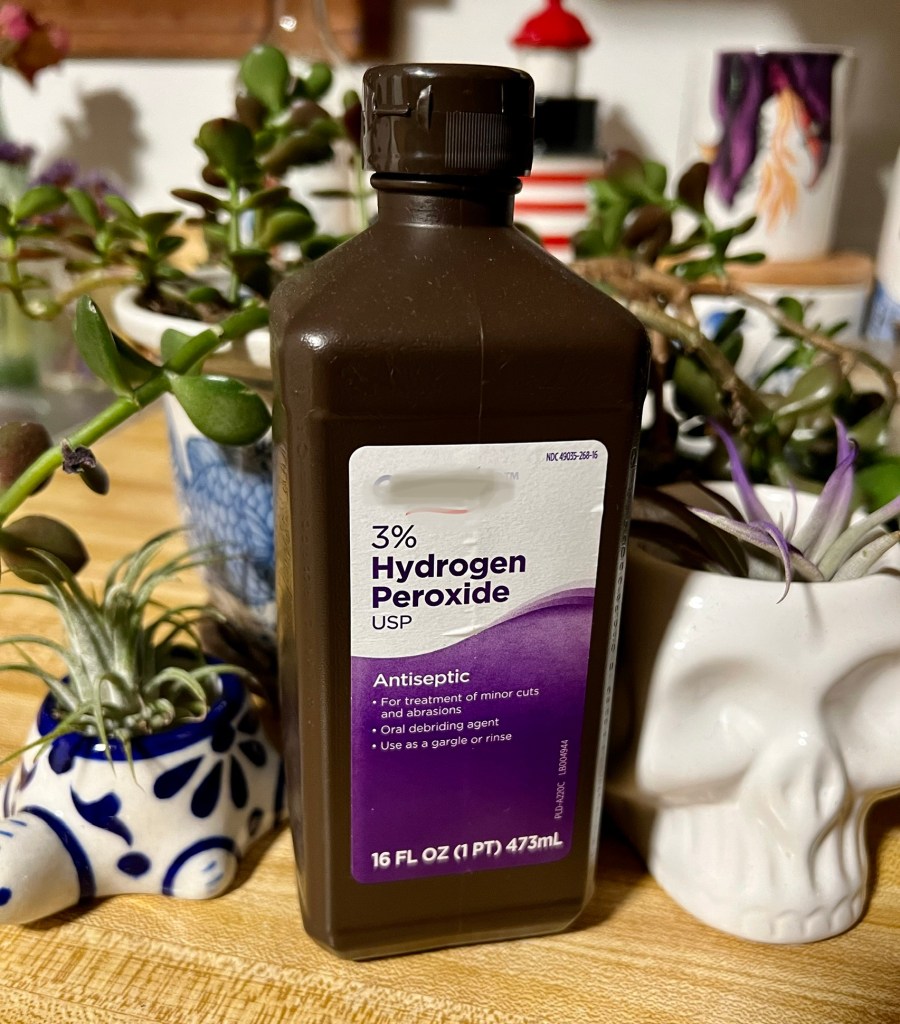
Hydrogen Peroxide. Many pesticide products contain hydrogen peroxide, but most are disinfectants (disinfectants are pesticides). Few are labeled for use on plants or soil. Those that are, for the most part, treat plant pathogens. They can be a good choice because ready-to-use, dilute hydrogen peroxide products are relatively low risk and break down quickly in the environment. More concentrated products, however, can burn the skin, damage the eyes, irritate the lungs, and cause gastric distress. Highly concentrated products can kill. And hydrogen peroxide is a strong oxidizer, meaning it can cause explosions if improperly stored. For those who feel they must use a chemical, a soil drench of the biopesticide Bacillus thuringiensis var. israelensis (Bti) is a better choice for gnat control than pharmaceutical hydrogen peroxide. I don’t recommend any sprays for adults. The risks of treating indoor areas for a nuisance pest generally outweigh any benefits. Remember, fungus gnats can’t harm people or pets—but pesticides can.
Resources: University of Maine Cooperative Extension, Ohio State University Extension, Colorado State University Extension, and CDC Agency for Toxic Substances and Disease Registry’s Toxic Substances Portal
 K.W. Bernard