

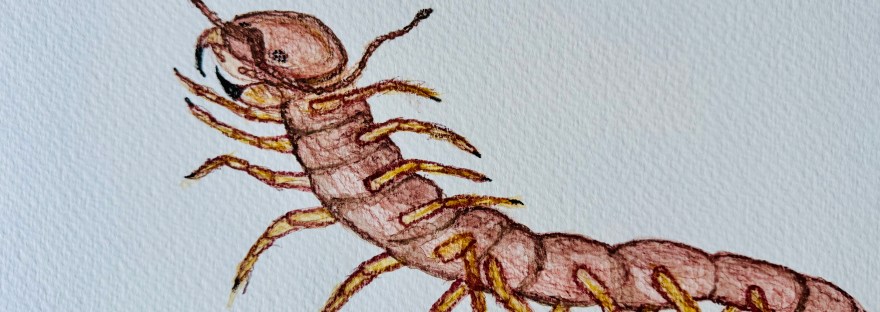
A nocturnal predator with dozens of appendages lurks in a damp, shadowy lair, awaiting its chance to snatch a victim with venomous jaws. Could it be a monster that strayed from our darkest dreams? A laboratory experiment gone nightmarishly wrong? An alien castaway from far beyond our solar system? Or is it merely an ancient arthropod?
There’s no doubt—the centipede is the ultimate creepy crawly. But despite inspiring one of the most hideous horror movies of all time and giving many people the heebie-jeebies, it’s far from a monster. Like spiders, centipedes are tiny, beneficial predators equipped with venom and more legs than we like to see. Admittedly, they’re not as sexy. They don’t leave dewdrop-coated masterpieces sparkling in the morning sun. Nor do they have a reputation as femme fatales. They lack the big, beautiful eyes and fuzzy cuteness of some charismatic arachnids. But just because they look like crunchy worms with an unholy number of legs doesn’t mean they crawled from the Abyss.
The centipede is a cool creature. I’ll prove it.
Venomous fangs legs
Centipedes are carnivores that use a pair of modified forelegs, called forcipules, to inject venom and subdue their prey. They feed primarily on other arthropods, but a few of the largest species can bring down small lizards, frogs, rodents, birds, and bats.
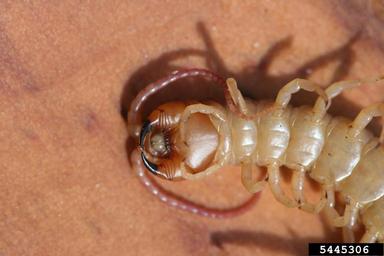
Doesn’t that make them dangerous?
Not really. Centipedes are excellent runners and prefer fleeing to fighting when disturbed by giant, lumbering primates. Even if handled, most are too small to break human skin. Yes, larger specimens can deliver a very painful pinch, but death by centipede is exceedingly rare. Allergic reactions are possible, though. Individuals who react to bee venom may be at particular risk.
Clean romance only
Although I prefer spicy monsters, abstinence is interesting in an arthropod. Centipedes don’t mate. Males drop spermatophores (sperm packets), and if the ladies are into it, they’ll pick them up and be on their way.
Maternal instincts
Centipedes are great moms! Many guard their eggs and hatchlings by wrapping around them. They also groom the little ones, removing bacteria and fungal spores that could make them sick.
Chemical weapons
While more common in millipede species, a few centipedes secrete defensive substances, including hydrogen cyanide, a deadly poison. Of course, one little arthropod can’t contaminate the air enough to harm a person. Still, skin contact with these substances can cause lesions, and ingesting millipedes can make you sick.
Drained’s centipede
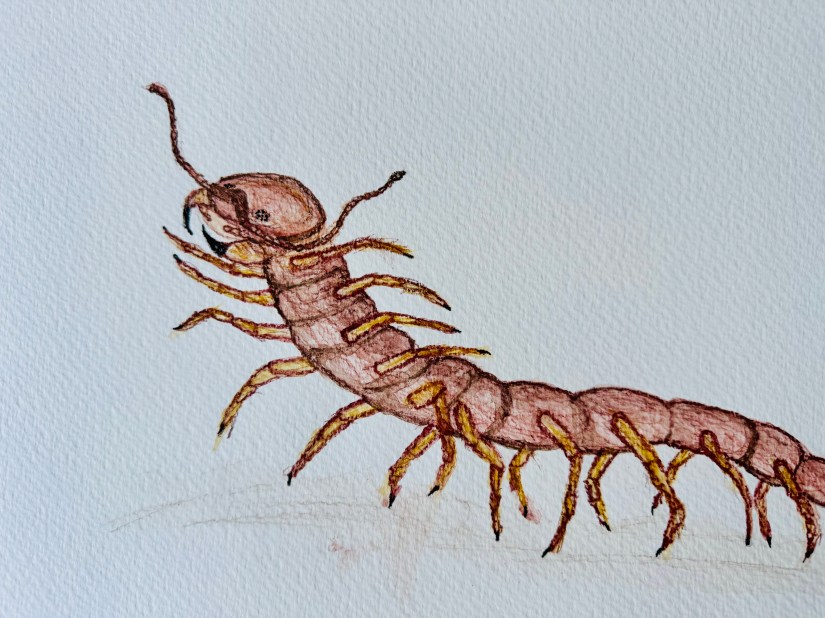
In Drained, Sarlona uses a spell to grow a hungry little centipede to gigantic proportions. It creates a fine distraction as it attacks her captors with its forcipules and knocks out a few guards with noxious fumes. I’ve explained elsewhere why arthropods can’t get very big and mentioned above that cyanide is more of a millipede thing, but, hey—it’s a magical world with fictional species.
So, what do you think? Are centipedes cool or just creepy?
RESOURCES:
Diaz, J. H. (2023). Poisonous, Venomous, or Harmless? Wilderness & Environmental Medicine. https://doi.org/10.1016/j.wem.2023.04.009
Mitić, B. M., Jovanović, V. B., Todosijević, M. M., Eckhard, M., Vasiljević, L. C., Tešević, V. V., & Vujisić, L. V. (2024). Chemical defence of a centipede (Clinopodes flavidus). Journal of Insect Physiology, 155, 104649. https://doi.org/10.1016/j.jinsphys.2024.104649
Undheim, E. A., Fry, B. G., & King, G. F. (2015). Centipede Venom: Recent Discoveries and Current State of Knowledge. Toxins, 7(3), 679-704. https://doi.org/10.3390/toxins7030679

 K.W. Bernard
I share your fascination. We’re on the same wavelength. The first chapter of The Election Before Doomsday ends with a giant centipede emerging from mushroom clouds. It’s fascinating that in Los Angeles they found a 476 leg creature. There’s an undiscovered world out there.
LikeLiked by 1 person
Sounds very cool! The more legs the better, haha
LikeLike